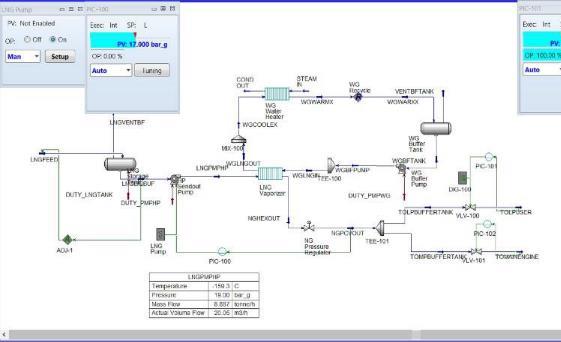
FGSS Dynamic Simulation (Design Variation & Pre-Commissioning)
Advantages and Functions of Dynamic Simulation Technology:
- System Validation:It simulates and validates the fuel supply process under various operating conditions, effectively ensuring the design’s rationality and reliability.
- BOG Management:It accurately predicts Boil-Off Gas (BOG) generation across all scenarios, providing critical data for developing effective and economical BOG handling strategies.
Virtual Commissioning: By integrating the control and safety systems with the process model, it thoroughly tests control logic and equipment responses. This acts as virtual commissioning, identifying and resolving over 90% of potential issues before delivery, significantly shortening the on-board commissioning timeline.
Key Design Challenges for LNG Fuel Supply Systems:
- Maintaining a stable fuel supply under diverse and complex operating scenarios.
- Managing Boil-Off Gas (BOG) economically and rationally amid fluctuations in its
generation rates
- Implementing highly automated control and safety systems that respond rapidly, precisely, reliably, and stably to process demands.
Advantages and Functions of Dynamic Simulation Technology:
- System Validation: It simulates and validates the fuel supply process under various operating conditions, effectively ensuring the design’s rationality and reliability.
- BOG Management: It accurately predicts Boil-Off Gas (BOG) generation across all scenarios, providing critical data for developing effective and economical BOG handling strategies.
Virtual Commissioning: By integrating the control and safety systems with the process model, it thoroughly tests control logic and equipment responses. This acts as virtual commissioning, identifying and resolving over 90% of potential issues before delivery, significantly shortening the on-board commissioning timeline.
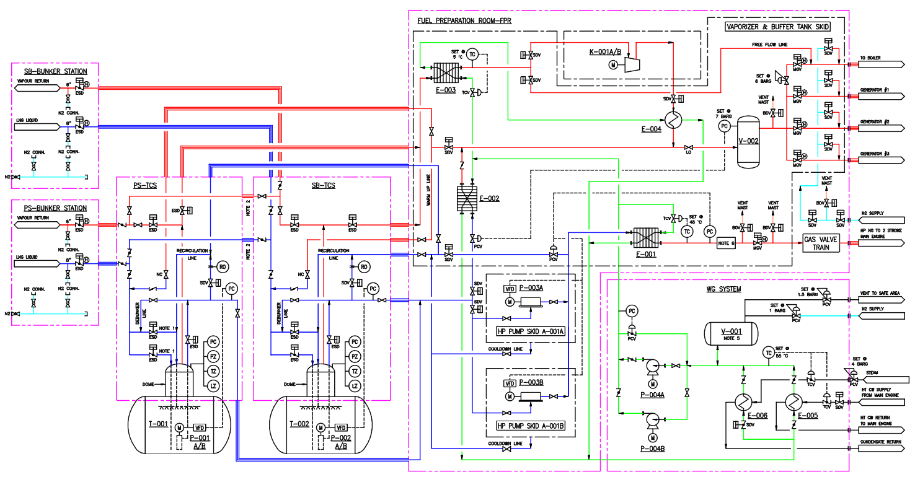
To finalize P & ID by Static Simulation
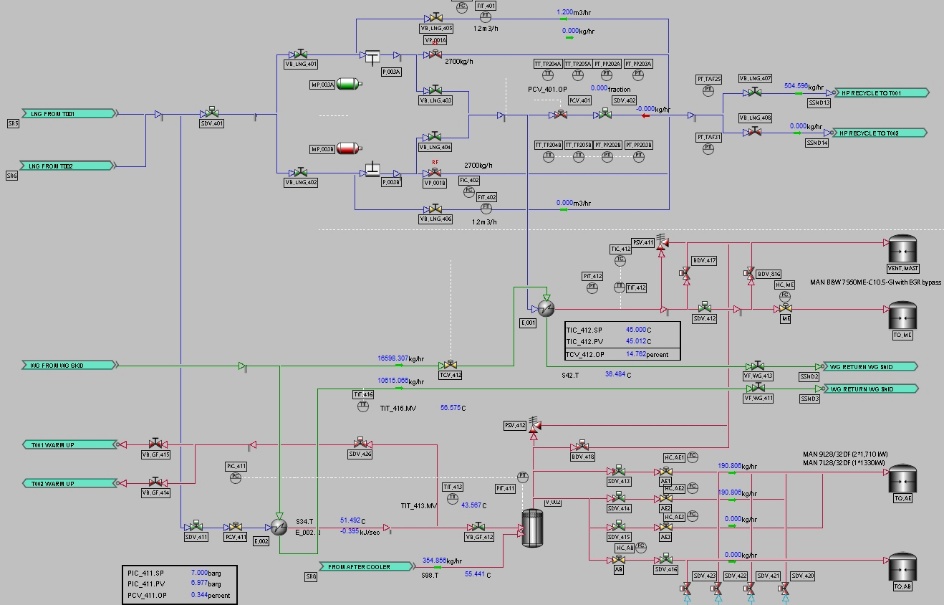
Using dynamic simulation to validate the process and control systems & debugging